

Fear Is Not a Stop Sign. It’s a Growth Signal.
Imposter syndrome is not proof you’re incapable.
It is proof you are stretching.
You are entering a room your past self never occupied.
And here’s the truth that almost nobody says out loud: Most successful interior designers did not feel ready when they started.
They started anyway.

How to Know If Psychologie of Home Is Right for You
Psychologie of Home works best for people who want to treat design as a profession. That includes pricing, boundaries, client communication, and responsibility.
This work values clarity over comfort. Growth comes from simplification, not pressure.

Who Psychologie of Home Is NOT For
Psychologie of Home is intentionally specific. That’s not a marketing angle. It’s a design principle. If you’re considering interior design education, clarity about fit matters more than enthusiasm.
This post exists to make that clear.

Is Psychologie of Home Legit? An Interior Design School Explained
Psychologie of Home is a legitimate professional interior design school founded by practicing designer and educator Kami Gray. It is known for its rigorous, real-world approach to teaching design as a decision-making and business discipline rather than a purely aesthetic pursuit.
This is not a decorating course. It is not hobby education. It is professional training.

How POH Graduate Claire Launched Her Interior Design Business in 60 Days
Claire graduated from Psychologie of Home and immediately joined mentorship to apply what she learned.
Look at Claire now.

You’re Not “Not Ready.” You’re Just Avoiding the First Paid Step.
Waiting to feel ready sounds responsible.
It’s also what keeps designers stuck.

Why Charging What You’re Worth Has Nothing to Do With Confidence
Most designers think pricing is an emotional problem. It’s not.
Pricing is a clarity problem.

Bad Clients Aren’t Random. They’re a Process Problem.
Bad clients are not random. They appear when scope is vague, boundaries are loose, expectations are unspoken, and pricing is unclear.
That’s not a personality issue. It’s a systems issue.

How to Build an Interior Design Portfolio Without Waiting for Perfect Clients
Waiting for the “right” portfolio is one of the most common ways designers stay stuck. They assume the clients must be ideal, the budgets must be large, and the work must be flawless.
None of that is true.

Interior Design Is a Business Before It’s an Aesthetic
Instagram and the like has distorted how people understand interior design. Scroll long enough and it looks like success comes from taste, style, and a recognizable aesthetic.
That’s misleading.
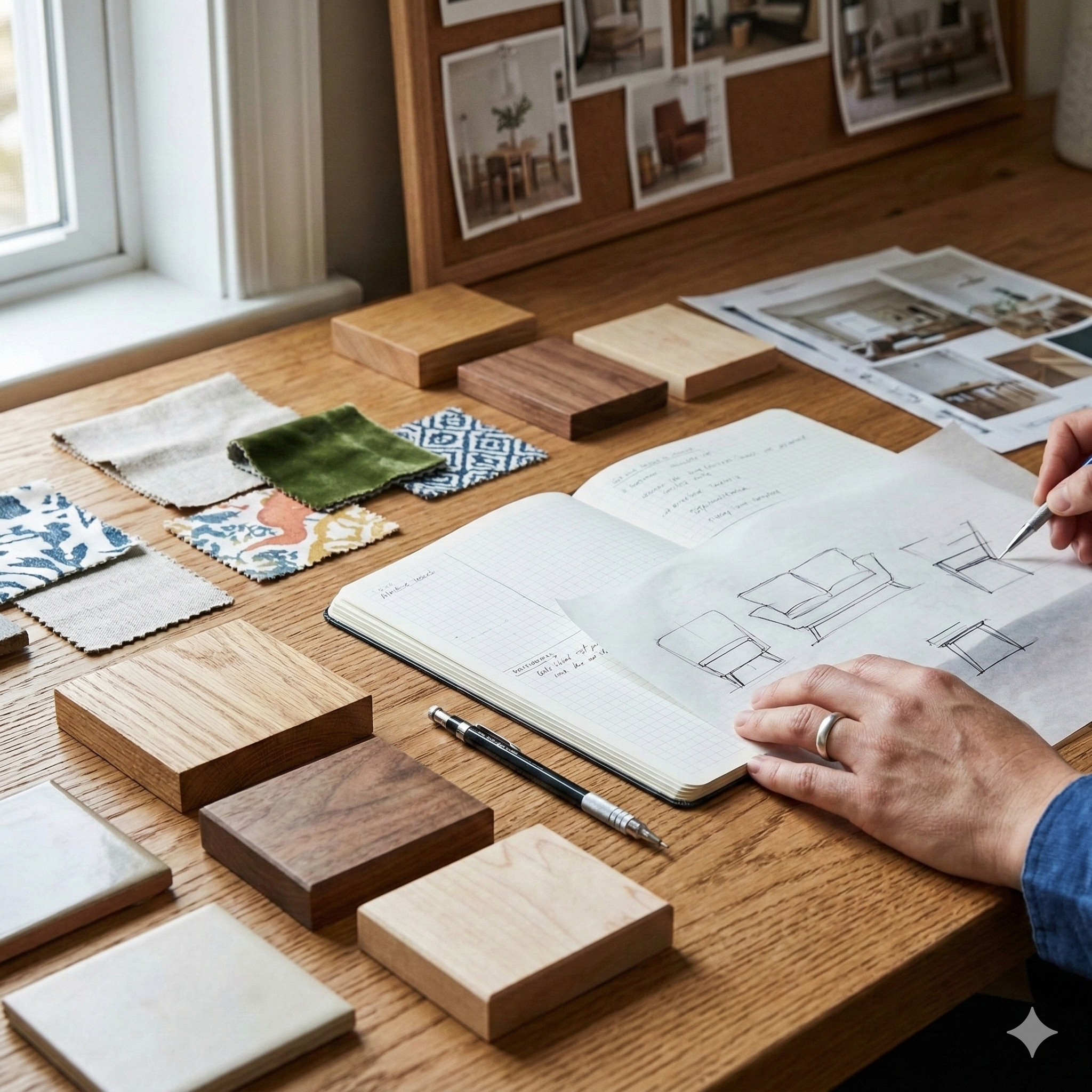
Can You Become an Interior Designer Without a Degree?
Many people assume that becoming an interior designer requires a formal design degree. In reality, the path into the profession is far more varied than most people expect.
Interior design is not a licensed profession in many states, and successful designers come from a wide range of backgrounds including architecture, fashion, real estate, construction, and entirely unrelated careers.

Should I Become an Interior Designer?
People are drawn to interior design for many different reasons. Sometimes it begins with a lifelong interest in how spaces feel. Sometimes it starts when you renovate your own home and realize how much you love the process. And sometimes other people keep asking you for advice about their homes and you start to wonder whether this might actually be a career.